- [email protected]
- +91-98198-15905
Tooth Extractions involve the removal of a tooth from its socket, typically performed when a tooth is severely damaged, decayed, or causing oral health issues.
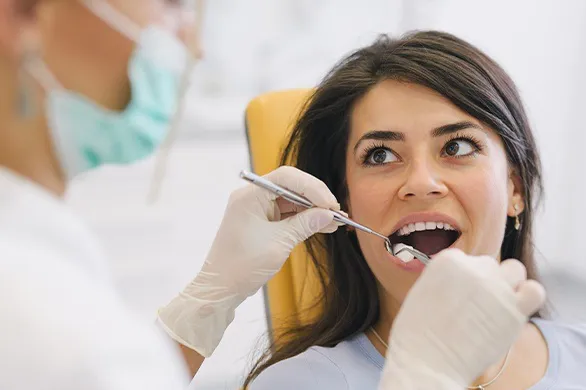
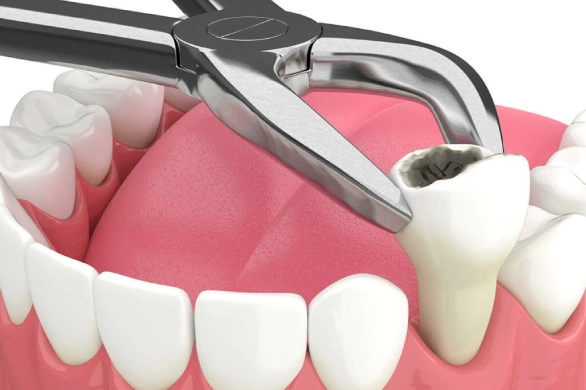
Surgical Tooth Extractions involve the removal of a tooth from its socket, typically performed when a tooth is severely damaged, decayed, or causing oral health issues. Unlike simple extractions, surgical extractions are more complex procedures that require an incision into the gum tissue to access and remove teeth that may be impacted, broken below the gum line, or have not fully erupted.
At Niraamay Dental Care in Mulund, our experienced dental surgeons specialize in performing surgical extractions with precision and care. These procedures are often necessary for wisdom teeth that are impacted or growing at improper angles, teeth with curved or long roots, teeth broken at the gum line, or teeth that require sectioning before removal. Understanding when a surgical extraction is needed versus a simple extraction is crucial for proper treatment planning and optimal patient outcomes.
Surgical tooth extraction becomes essential in several scenarios. Impacted wisdom teeth that fail to emerge properly through the gum line often require surgical intervention to prevent infection, crowding, and damage to adjacent teeth. Teeth that have broken off at or below the gum line cannot be removed with conventional methods and need surgical access. Additionally, teeth with exceptionally long or curved roots, severe decay extending below the gum tissue, or teeth requiring bone removal for extraction all necessitate surgical procedures.
Our team at Niraamay Dental Care thoroughly evaluates each case using advanced diagnostic imaging, including digital X-rays and 3D cone beam scans when necessary, to determine the most appropriate extraction approach. This careful assessment ensures we provide the safest and most effective treatment for every patient.
The procedure begins with comprehensive local anesthesia to ensure complete numbness and comfort throughout the treatment. For anxious patients or complex cases, sedation options are available. Once the area is properly anesthetized, the oral surgeon makes a small incision in the gum tissue to expose the tooth and surrounding bone. In some cases, a small amount of bone around the tooth may need to be removed or the tooth may be sectioned into smaller pieces for easier removal.
After the tooth is successfully extracted, the surgical site is thoroughly cleaned and any sharp bone edges are smoothed. Dissolvable or non-dissolvable sutures may be placed to close the incision and promote proper healing. The entire procedure is performed with meticulous attention to minimize trauma and promote faster recovery.
Surgical Tooth Extractions are necessary for preventing further dental problems and relieving pain caused by damaged or problematic teeth. Leaving problematic teeth untreated can lead to infections, cysts, damage to neighboring teeth, bite misalignment, and chronic pain. Early intervention through surgical extraction can prevent these complications and protect your overall oral health.
Modern techniques and anesthesia ensure a comfortable and efficient extraction process for improved oral health. At Niraamay Dental Care, we utilize the latest surgical instruments, advanced anesthetic techniques, and proven protocols to make your experience as comfortable as possible. Our compassionate approach prioritizes patient comfort, thorough communication, and comprehensive post-operative care to ensure optimal healing and recovery.
With our expertise in surgical extractions and commitment to painless dentistry, you can trust that your dental health is in capable, caring hands.
A surgical tooth extraction is a dental procedure where a tooth is removed from its socket in the jawbone. This is typically performed when a tooth is severely damaged, decayed, impacted, or causing other oral health issues that cannot be resolved with other treatments.
Surgical extractions are needed when a tooth is severely decayed beyond repair, broken at the gum line, impacted (such as wisdom teeth), infected and affecting surrounding tissues, crowding other teeth, or causing pain and oral health complications that other treatments cannot address.
No, the extraction procedure itself is not painful. Niraamay Dental Care uses modern anesthesia techniques to ensure you're comfortable throughout the process. You may feel pressure during the extraction, but you shouldn't experience pain. Some discomfort during healing is normal and can be managed with prescribed medication.
The duration varies depending on the complexity of the extraction. Simple extractions may take 20-30 minutes, while more complex surgical extractions, such as impacted wisdom teeth, can take 45 minutes to an hour or more.
Most patients recover within 3-7 days, though complete healing of the extraction site can take several weeks. You should be able to return to normal activities within a day or two, following your dentist's post-operative care instructions carefully.
Aftercare includes avoiding rinsing or spitting for the first 24 hours, eating soft foods, avoiding hot liquids initially, taking prescribed medications as directed, applying ice packs to reduce swelling, avoiding smoking and alcohol, and maintaining gentle oral hygiene while avoiding the extraction site.
While tooth extractions are generally safe, potential complications can include dry socket, infection, prolonged bleeding, nerve damage, or jaw fracture in rare cases. Following your dentist's post-operative instructions significantly reduces these risks.
You should stick to soft foods and liquids for the first few days, such as yogurt, smoothies, mashed potatoes, and soups. Gradually reintroduce solid foods as the extraction site heals. Avoid hard, crunchy, sticky foods and avoid chewing on the extraction side.
Niraamay Dental Care offers several tooth replacement options including dental implants, bridges, and dentures. The best option depends on your specific situation, the location of the extracted tooth, and your overall oral health. Your dentist will discuss these options with you.
You can contact Niraamay Dental Care at +91-98198-15905 or +91-81692-43802, email them at the address provided on their website, or visit their clinic at Silver Birch, Swapna Nagari, Mulund West, Mumbai 400080. They operate Monday through Saturday from 9am to 1pm.