- [email protected]
- +91-98198-15905
An implant-supported bridge is a dental restoration that replaces multiple adjacent missing teeth. Dental implants, typically made of titanium, are surgically placed into the jawbone to act as artificial tooth roots. The bridge, consisting of multiple connected crowns, is then attached to these implants, creating a stable and functional restoration.
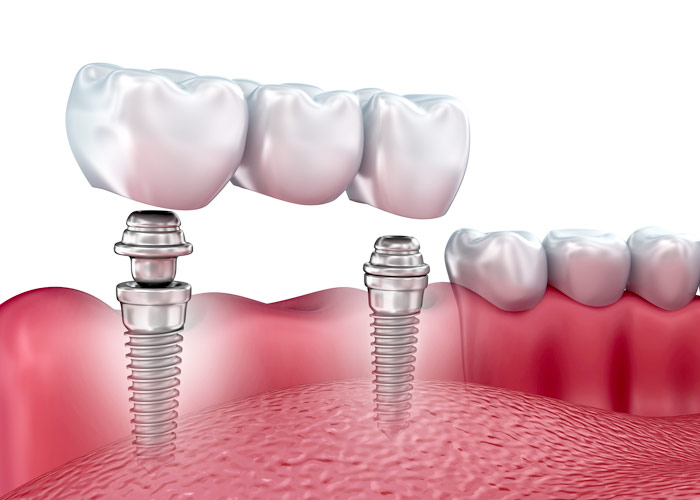
An implant-supported bridge is a dental restoration that replaces multiple adjacent missing teeth. Dental implants, typically made of titanium, are surgically placed into the jawbone to act as artificial tooth roots. The bridge, consisting of multiple connected crowns, is then attached to these implants, creating a stable and functional restoration.
Unlike traditional bridges that rely on natural teeth for support, implant-supported bridges are anchored directly into the jawbone through surgically placed dental implants. This innovative approach offers superior stability, eliminates the need to alter healthy adjacent teeth, and provides a permanent solution for replacing multiple missing teeth in a row.
Individuals who have lost several consecutive teeth may opt for an implant-supported bridge. This solution efficiently spans the gap created by the missing teeth, restoring both aesthetics and functionality. Dental implants used to support the bridge help stimulate the jawbone, preventing bone loss that commonly occurs when teeth are missing.
With the integration of implants, this bridge provides long-term oral health benefits and a natural-looking smile.
Because implant-supported bridges are firmly anchored in the jawbone, they provide exceptional stability during eating and speaking. Patients can enjoy their favorite foods without worry, and the restoration feels remarkably similar to natural teeth.
One of the most significant advantages is the prevention of jawbone deterioration. When teeth are lost, the surrounding bone begins to resorb over time. Dental implants mimic natural tooth roots and stimulate the bone, maintaining its density and preventing the sunken facial appearance that can occur with bone loss.
Traditional dental bridges require grinding down healthy neighboring teeth to serve as anchors. Implant-supported bridges eliminate this need, preserving the structure and health of your remaining natural teeth.
With proper care and maintenance, implant-supported bridges can last for decades, making them a cost-effective long-term investment in your oral health. The titanium implants integrate with the bone through a process called osseointegration, creating a permanent foundation.
These bridges allow for easier cleaning compared to traditional bridges. You can brush and floss more effectively around the implants, reducing the risk of gum disease and decay in adjacent teeth.
The procedure typically involves multiple stages over several months. First, dental implants are surgically placed into the jawbone. During the healing period, which usually takes three to six months, the implants fuse with the bone. Once healing is complete, abutments are attached to the implants, and custom-made bridge crowns are permanently secured to these abutments.
Ideal candidates for implant-supported bridges have lost multiple consecutive teeth, possess adequate jawbone density to support implants, maintain good oral hygiene, and are committed to regular dental visits. Patients with certain health conditions or insufficient bone may require additional treatments before implant placement.
At Niraamay Dental Care in Mulund, we use advanced technology and techniques to ensure precise implant placement and beautiful, functional results that restore your confidence and quality of life.
An implant-supported bridge is a dental restoration that replaces multiple missing adjacent teeth using dental implants as anchors, providing a stable, natural-feeling solution.
Unlike traditional bridges that rely on adjacent natural teeth for support, implant-supported bridges are anchored directly onto implant posts placed in the jawbone — preserving healthy teeth and preventing bone loss.
Ideal candidates are individuals missing several adjacent teeth with good overall health and adequate jawbone density; your dentist at Niraamay will evaluate this during a consultation.
The treatment typically involves:
Consultation and planning
Implant placement surgery
Healing (osseointegration)
Attaching the custom-made bridge once implants fuse with bone.
The process can take several months, often 3–6 months, due to the healing phase needed for the implants to integrate securely with the jawbone.
The implant placement is performed under local anesthesia. Mild discomfort or swelling afterwards is common but manageable with pain control as advised by your dentist.
With proper oral hygiene and regular dental check-ups, implant-supported bridges can last many years — even decades.
Just like natural teeth — brush twice daily, floss/clean between the implant area, and visit your dentist regularly for professional cleaning and assessment.
There are no strict long-term dietary restrictions, but avoiding very hard objects (like ice or hard candies) and chewing carefully on the implant area is recommended to protect your bridge.
Cost varies based on the number of implants, materials, and individual case complexity. It’s best to get a detailed estimate during your consultation at Niraamay Dental Care.